By THOM SHANKER, nytimes.com, Feb. 22, 2008
WASHINGTON — Videotape of the Navy mission to shoot down a dying spy satellite made available Thursday shows an interceptor missile ascending atop a bright trail of burning fuel, and then a flash, a fireball, a plume of vapor. A cloud of debris left little doubt that the missile had squarely hit its mark as the satellite spent its final days orbiting more than 130 miles above the Pacific Ocean.
A different kind of doubt still lingers, though, expressed by policy analysts, some politicians and scientists, and not a few foreign powers, especially China and Russia:
Should the people of the world be breathing a sigh of relief that the risk of a half-ton of frozen, toxic rocket fuel landing who knows where has passed? Or should they be worried about the latest display of the United States’ technical prowess, and see it as a thinly veiled test for a shadow antisatellite program?
Defense Secretary Robert M. Gates, who personally gave the order to go ahead with the satellite shootdown Wednesday, told reporters in Hawaii on Thursday that he was prepared to share some details of the operation with China to ease its concerns that the debris might still prove dangerous. Adm. Timothy J. Keating, the commander of American forces in the Pacific, has reached out to several nations in the region to explain the mission, as well.
Addressing the diplomatic concerns, senior officials dismissed questions raised by the Chinese and the Russians, and echoed by some arms control analysts, about whether the episode was really a test of space weaponry. They pointed out that the missile used in the operation, the Navy’s SM-3 interceptor, was designed to counter a limited ballistic missile attack and had to be reprogrammed for this unexpected task, the likes of which the authorities are unlikely ever to face again.
In missile defense, an interceptor must find a red-hot enemy warhead as it arcs on a relatively short ballistic path, a task often described as “hitting a bullet with a bullet.” This time, the target — much larger then a warhead, almost the size of a school bus — was circling Earth predictably about 16 times a day.
It was still a bit of a long shot. The fuel tank that was the bull’s eye was only about 40 inches across.
And although the United States has hit test targets in space before — including a satellite destroyed in 1985 in a demonstration of an antisatellite weapon launched from a fighter jet — the successful demonstrations have been relatively few and far between.
What Wednesday’s successful strike in space conclusively proved was not infallibility but a robust and flexible military capability that can be cited by either side in what no doubt will be the ensuing debate.
The mission was conducted from Navy warships. So the United States can move this capability at will over three-quarters of the globe.
The missile-defense interceptor was converted to an antisatellite capability in little more than a month. No expensive research and development program. No battles with Congress over money. No starting from scratch on white boards in some laboratory.
This demonstration of military agility has to cause any adversary to pause.
“This was uncharted territory,” said Gen. James E. Cartwright of the Marines, who is vice chairman of the Joint Chiefs of Staff. “The technical degree of difficulty was significant here.”
General Cartwright noted that important elements of the nation’s missile defense system had been used, in particular the sensors.
“That was the key piece that we would take from the missile defense system,” he said.
To ready the missile-defense rocket for the mission, he said: “We added a lot of instrumentation. We made some modifications to the software to be able to go after a satellite.”
In somewhat theatrical language, the mission was hailed by Riki Ellison, president of the Missile Defense Advocacy Alliance, one of the more energetic groups promoting the development of ballistic missile defenses.
“The factual reality of using deployed missile defenses to destroy a falling satellite or a ballistic missile or even a meteor from space that would risk human life is an achievement for mankind,” a statement from the organization said.
Yet, even the successful mission in no way proves that the United States is safe from nuclear attack, or that it can do what it wants in space.
Mr. Gates, at the start of a weeklong series of meetings in Asia, said that the debate over whether the United States’ missile defense system worked was “behind us” but that issues remained about exactly what types of missile threats the system could be used against.
“The question of whether this capability works has been settled,” Mr. Gates said in Hawaii after a tour of the destroyer Russell, which participated in the satellite operation. “The question is against what kind of threat, how large a threat, how sophisticated a threat.”
The White House and the Pentagon said the hazard posed by the failed National Reconnaissance Office satellite was from its hydrazine fuel. It may be 24 to 48 hours before officials can state with certainty that the fuel tank was punctured and that the hydrazine is no longer a threat.
But Representative Edward J. Markey, a Massachusetts Democrat on the House Homeland Security Committee, said, “The geopolitical fallout of this intercept could be far greater than any chemical fallout that would have resulted from the wayward satellite.”
Mr. Markey said: “The Bush administration’s decision to use a missile to destroy the satellite based on a questionable ‘safety’ justification poses a great danger of signaling an ‘open season’ for other nations to test weapons for use against our satellites. Russia and China are sure to view this intercept as proof that the United States is already pursuing an arms race in space, and that they need to catch up.”
The Chinese warned Thursday that the United States Navy’s action could threaten security in outer space. Liu Jianchao, the Chinese Foreign Ministry spokesman, said at a news conference in Beijing that the United States should promptly share data about the passage of the remaining pieces of the satellite.
“China is continuously following closely the possible harm caused by the U.S. action to outer space security and relevant countries,” Mr. Liu said, according to The Associated Press.
Mark Mazzetti contributed reporting from Hawaii, and Keith Bradsher from Hong Kong.
Showing posts with label space. Show all posts
Showing posts with label space. Show all posts


China accuses US of double standards over satellite strike
James Randerson in Washington and Mark Tran guardian.co.uk
Feb. 21, 2008
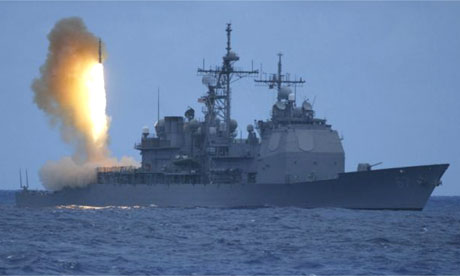
China today accused Washington of double standards after the US navy fired a missile to destroy a failed satellite 150 miles above the Pacific.
Beijing - which was criticised by the US and others when it shot down one of its own satellites last year - turned the tables on the Bush administration after the satellite was shot down today.
"The United States, the world's top space power, has often accused other countries of vigorously developing military space technology," the People's Daily, the ruling Communist party's newspaper, said.
"But faced with the Chinese-Russian proposal to restrict space armaments, it runs in fear from what it claimed to love."
Earlier this month, Russia and China proposed a treaty to ban weapons in space and the use or threat of force against satellites and other spacecraft.
Washington rejected the proposal as unworkable, saying it favoured confidence-building efforts, US reports said.
At a regular news conference, the Chinese foreign ministry spokesman, Liu Jianchao, said: "The Chinese side is continuing to closely follow the US action, which may influence the security of outer space and may harm other countries."
US defence officials said they were confident that a missile, fired from the USS Lake Erie, had hit its target, destroying a tank of toxic fuel on the satellite, which failed soon after being launched in 2006.
Video footage released by the Pentagon showed a fireball when the missile struck the satellite, indicating that the fuel tank - containing hydrazine - had exploded.
"All indications are that it was a successful intercept," General James Cartwright said. The official added that it could take another 24-48 hours to know for certain whether the tank had been destroyed.
The missile was fired at 3.26am GMT, despite earlier reports that the operation would be postponed because of bad weather in the Pacific.
The modified tactical standard missile 3 (SM-3) hit the satellite at an altitude of 150 miles (247km) while it was travelling at approximately 17,000mph.
Two other ships, the USS Decatur and the USS Russell, were close by, and part of the task force, run by the Army Space and Missile Defence Command in Colorado Springs. If the initial shot had missed the satellite, they could have provided back up missiles.
Pentagon officials insisted the operation was necessary to prevent possible deaths following the satellite's re-entry into the earth's atmosphere. The craft, a spy satellite, was carrying around 450kg of toxic hydrazine fuel.
The successful launch proved that the US navy's Aegis anti-missile radar system could be quickly adapted to shoot down satellites.
When China shot down a defunct weather satellite last January, there were protests from western governments.
In the aftermath of the exercise, Gordon Johndroe, a White House spokesman, said: "The US believes China's development and testing of such weapons is inconsistent with the spirit of cooperation that both countries aspire to in the civil space area.
"We and other countries have expressed our concern regarding this action to the Chinese."
Downing Street also expressed its concern at the time, condemning what it said was a "lack of consultation".
The Chinese action was also criticised because of the millions of pieces of orbiting space junk, created by the satellite's destruction, which could damage other satellites or the space shuttle while in orbit.
However, space junk should not be a problem from today's space shot though. Because of the satellite's relatively low altitude, debris began re-entering the atmosphere almost straight away, the US defence department said.
Most debris should re-enter the atmosphere within 48 hours, and the remaining pieces will leave orbit within 40 days.
Scientists and groups opposed to the militarisation of space backed China's criticism of the US exercise.
Professor Michio Kaku, the distinguished physicist and author of Physics of the Impossible, said: "With a certain amount of justification, the Chinese claim there is a double standard … this latest move can be seen as provocative, since the US has refused to renegotiate and strengthen the 1987 outer space treaty.
"What is needed is a comprehensive ban on the militarisation of outer space … arming the heavens will only put us one step closer to a disastrous war in space that no one can win."
Feb. 21, 2008
China today accused Washington of double standards after the US navy fired a missile to destroy a failed satellite 150 miles above the Pacific.
Beijing - which was criticised by the US and others when it shot down one of its own satellites last year - turned the tables on the Bush administration after the satellite was shot down today.
"The United States, the world's top space power, has often accused other countries of vigorously developing military space technology," the People's Daily, the ruling Communist party's newspaper, said.
"But faced with the Chinese-Russian proposal to restrict space armaments, it runs in fear from what it claimed to love."
Earlier this month, Russia and China proposed a treaty to ban weapons in space and the use or threat of force against satellites and other spacecraft.
Washington rejected the proposal as unworkable, saying it favoured confidence-building efforts, US reports said.
At a regular news conference, the Chinese foreign ministry spokesman, Liu Jianchao, said: "The Chinese side is continuing to closely follow the US action, which may influence the security of outer space and may harm other countries."
US defence officials said they were confident that a missile, fired from the USS Lake Erie, had hit its target, destroying a tank of toxic fuel on the satellite, which failed soon after being launched in 2006.
Video footage released by the Pentagon showed a fireball when the missile struck the satellite, indicating that the fuel tank - containing hydrazine - had exploded.
"All indications are that it was a successful intercept," General James Cartwright said. The official added that it could take another 24-48 hours to know for certain whether the tank had been destroyed.
The missile was fired at 3.26am GMT, despite earlier reports that the operation would be postponed because of bad weather in the Pacific.
The modified tactical standard missile 3 (SM-3) hit the satellite at an altitude of 150 miles (247km) while it was travelling at approximately 17,000mph.
Two other ships, the USS Decatur and the USS Russell, were close by, and part of the task force, run by the Army Space and Missile Defence Command in Colorado Springs. If the initial shot had missed the satellite, they could have provided back up missiles.
Pentagon officials insisted the operation was necessary to prevent possible deaths following the satellite's re-entry into the earth's atmosphere. The craft, a spy satellite, was carrying around 450kg of toxic hydrazine fuel.
The successful launch proved that the US navy's Aegis anti-missile radar system could be quickly adapted to shoot down satellites.
When China shot down a defunct weather satellite last January, there were protests from western governments.
In the aftermath of the exercise, Gordon Johndroe, a White House spokesman, said: "The US believes China's development and testing of such weapons is inconsistent with the spirit of cooperation that both countries aspire to in the civil space area.
"We and other countries have expressed our concern regarding this action to the Chinese."
Downing Street also expressed its concern at the time, condemning what it said was a "lack of consultation".
The Chinese action was also criticised because of the millions of pieces of orbiting space junk, created by the satellite's destruction, which could damage other satellites or the space shuttle while in orbit.
However, space junk should not be a problem from today's space shot though. Because of the satellite's relatively low altitude, debris began re-entering the atmosphere almost straight away, the US defence department said.
Most debris should re-enter the atmosphere within 48 hours, and the remaining pieces will leave orbit within 40 days.
Scientists and groups opposed to the militarisation of space backed China's criticism of the US exercise.
Professor Michio Kaku, the distinguished physicist and author of Physics of the Impossible, said: "With a certain amount of justification, the Chinese claim there is a double standard … this latest move can be seen as provocative, since the US has refused to renegotiate and strengthen the 1987 outer space treaty.
"What is needed is a comprehensive ban on the militarisation of outer space … arming the heavens will only put us one step closer to a disastrous war in space that no one can win."
Missile Defense Shoots Down Toxic Satellite Mitigating Risk to Human Life
WASHINGTON, Feb. 21 /PRNewswire- USNewswire/ -- Riki Ellison, President of the Missile Defense Advocacy Alliance (http://www.missiledefenseadvocacy.org) let the worldwide membership of the Missile Defense Advocacy Alliance know that our Navy's Aegis missile defense system was successful in its fist try with a SM-3 in the shoot down of the failing US 193 satellite. Extracts of his comments follow:
"Global protection of human life from Space was proven, demonstrated and executed tonight by the use of our country's missile defense technology and her current deployed missile defense systems -- the Aegis USS Lake Erie (CG 70). This historic intercept of a toxic satellite falling from space, harmful to human life around the world has given mankind its first ever reliable deployed capability to protect life from objects falling from space."
"The investment, the political will, the engineering ingenuity, the determination of our public, our Congress, our military and our President to develop and deploy a system that was created by American Industry and the military, proven through vigorous testing, deployed on sea and land-based platforms and adaptable to provide an accurate pin point precision defense of hitting an object in space is truly a remarkable historic feat."
"The factual reality of using deployed missile defenses to destroy a falling satellite or a ballistic missile or even a meteor from space that would risk human life is an achievement for mankind."
"Missile Defense will continue to become more and more universal throughout the world and it will become more reliable and effective, so as to one day in the near future, we as a world can eliminate and mitigate risk from any and all harmful objects coming from space that would threaten mankind."
"The intercept of the Satellite US 193 occurred at 10:26 PM EST on Wednesday in the Pacific Ocean off of Hawaii. A Standard Missile-3 (SM-3) was fired a few minutes earlier off the USS Lake Erie using information fed by the ship's on board Aegis radar tracking and discrimination sensor to guide the missile close to the falling satellite where the missile engaged its heat seeking sensor thereby enabling a direct perpendicular hit on the 5,000 lb satellite with a kinetic energy impact of 22,000 mph. The satellite was destroyed at 10:26 PM EST. The majority of the small pieces of the satellite will burn up in the atmosphere upon reentry whereby the bigger pieces will fall harmlessly into the Pacific Ocean in the first 48 hours, and the remaining pieces will re-enter the atmosphere over the next month."
"The Sea Based X band radar was deployed in the area to support independently the discrimination and tracking of the destroyed Satellite. Other US military sensors and satellites were deployed in the area and were also used for evaluation of the intercept." "The Aegis Destroyer USS Decatur (DDG-73) accompanied the USS Lake Erie in this mission as a redundant back up with a capable SM-3 missile of its own as well as a duplicate Aegis sensor and radar." Ellison closed his remarks by saying: "We as a nation have made the world a safer place for our generation and generations to come."
Riki Ellison is available for on-the-record interviews at 571 213-3328 or call Mike Terrill at 602 885-1955 if assistance is needed.
"Global protection of human life from Space was proven, demonstrated and executed tonight by the use of our country's missile defense technology and her current deployed missile defense systems -- the Aegis USS Lake Erie (CG 70). This historic intercept of a toxic satellite falling from space, harmful to human life around the world has given mankind its first ever reliable deployed capability to protect life from objects falling from space."
"The investment, the political will, the engineering ingenuity, the determination of our public, our Congress, our military and our President to develop and deploy a system that was created by American Industry and the military, proven through vigorous testing, deployed on sea and land-based platforms and adaptable to provide an accurate pin point precision defense of hitting an object in space is truly a remarkable historic feat."
"The factual reality of using deployed missile defenses to destroy a falling satellite or a ballistic missile or even a meteor from space that would risk human life is an achievement for mankind."
"Missile Defense will continue to become more and more universal throughout the world and it will become more reliable and effective, so as to one day in the near future, we as a world can eliminate and mitigate risk from any and all harmful objects coming from space that would threaten mankind."
"The intercept of the Satellite US 193 occurred at 10:26 PM EST on Wednesday in the Pacific Ocean off of Hawaii. A Standard Missile-3 (SM-3) was fired a few minutes earlier off the USS Lake Erie using information fed by the ship's on board Aegis radar tracking and discrimination sensor to guide the missile close to the falling satellite where the missile engaged its heat seeking sensor thereby enabling a direct perpendicular hit on the 5,000 lb satellite with a kinetic energy impact of 22,000 mph. The satellite was destroyed at 10:26 PM EST. The majority of the small pieces of the satellite will burn up in the atmosphere upon reentry whereby the bigger pieces will fall harmlessly into the Pacific Ocean in the first 48 hours, and the remaining pieces will re-enter the atmosphere over the next month."
"The Sea Based X band radar was deployed in the area to support independently the discrimination and tracking of the destroyed Satellite. Other US military sensors and satellites were deployed in the area and were also used for evaluation of the intercept." "The Aegis Destroyer USS Decatur (DDG-73) accompanied the USS Lake Erie in this mission as a redundant back up with a capable SM-3 missile of its own as well as a duplicate Aegis sensor and radar." Ellison closed his remarks by saying: "We as a nation have made the world a safer place for our generation and generations to come."
Riki Ellison is available for on-the-record interviews at 571 213-3328 or call Mike Terrill at 602 885-1955 if assistance is needed.
Military Says Missile Hit Spy Satellite
By ROBERT BURNS, AP, WashingtonPost.com, Feb. 20, 2008
WASHINGTON -- A missile launched from a Navy ship successfully struck a dying U.S. spy satellite passing 130 miles over the Pacific on Wednesday, a defense official said. Full details were not immediately available. It happened just after 10:30 p.m. EST.
Two officials said the missile was launched successfully. One official, who is close to the process, said it hit the target. He said details on the results were not immediately known.
The goal in this first-of-its- kind mission for the Navy was not just to hit the satellite but to obliterate a tank aboard the spacecraft carrying 1,000 pounds of a toxic fuel called hydrazine.
U.S. officials have said the fuel would pose a potential health hazard to humans if it landed in a populated area. Although the odds of that were small even if the Pentagon had chosen not to try to shoot down the satellite, it was determined that it was worth trying to eliminate even that small chance.
Officials said it might take a day or longer to know for sure if the toxic fuel was blown up.
WASHINGTON -- A missile launched from a Navy ship successfully struck a dying U.S. spy satellite passing 130 miles over the Pacific on Wednesday, a defense official said. Full details were not immediately available. It happened just after 10:30 p.m. EST.
Two officials said the missile was launched successfully. One official, who is close to the process, said it hit the target. He said details on the results were not immediately known.
The goal in this first-of-its- kind mission for the Navy was not just to hit the satellite but to obliterate a tank aboard the spacecraft carrying 1,000 pounds of a toxic fuel called hydrazine.
U.S. officials have said the fuel would pose a potential health hazard to humans if it landed in a populated area. Although the odds of that were small even if the Pentagon had chosen not to try to shoot down the satellite, it was determined that it was worth trying to eliminate even that small chance.
Officials said it might take a day or longer to know for sure if the toxic fuel was blown up.
U.S. issues notice on downing of satellite
CNN.com, Feb. 19, 2008
WASHINGTON (CNN) -- The U.S. Navy likely will make its first attempt to shoot down a faulty spy satellite Wednesday night.
The U.S. government issued a formal notice warning ships and planes to stay clear of a large area of the Pacific Ocean west of Hawaii.
The notice says the two- and-a-half hour window begins 2:30 a.m. Thursday Greenwich Mean Time, which is 9:30 p.m. Wednesday on the East Coast, and 4:30 p.m. Wednesday in Hawaii.
The timing is also after the U.S. space shuttle Atlantis is scheduled to be safely on the ground.
Pentagon officials caution that the notice reflects the first opportunity to take a shot at the satellite, but it's possible the attempt could be delayed until later. Watch Pentagon spokesman Jeff Morrell describe the launch window
"We have to make the notification, but it's possible the conditions won't be ideal, or that everything won't be ready," said a Pentagon official who asked not to be identified.
Pentagon officials says if the first attempt to hit the satellite fails, there may be time for a second attempt, but that would only come after an assessment that would be hours or even days after the first attempt.
Because the 5,000-pound satellite malfunctioned immediately after launch in December 2006, it has a full tank of fuel. It would likely survive re-entry and disperse potentially deadly fumes over an area the size of two football fields, officials have said.
The Navy plans to fire at the satellite as it enters Earth's atmosphere at an altitude of about 150 miles.
Officials want the missile to hit the edge of the atmosphere to ensure debris re-enters and burns up quickly.
The Missile Defense Agency estimated the cost of a sea-based attempted intercept at $40 million to $60 million.
Without any intervention, Pentagon officials have said they believe the satellite would come down on its own in early March.
The option of striking the satellite with a missile launched from an Aegis cruiser was decided upon by President Bush after consultation with several government and military officials and aerospace experts, said Deputy National Security Adviser James Jeffrey.
"If we miss, nothing changes," said NASA administrator Michael Griffin. "If we shoot and barely touch it, the satellite is just barely in orbit" and would still burn up somewhat in the atmosphere, he said.
"If we shoot and get a direct hit, that's a clean kill and we're in good shape," he added.
CNN Senior Pentagon Correspondent Jamie McIntyre contributed to this report.
WASHINGTON (CNN) -- The U.S. Navy likely will make its first attempt to shoot down a faulty spy satellite Wednesday night.
The U.S. government issued a formal notice warning ships and planes to stay clear of a large area of the Pacific Ocean west of Hawaii.
The notice says the two- and-a-half hour window begins 2:30 a.m. Thursday Greenwich Mean Time, which is 9:30 p.m. Wednesday on the East Coast, and 4:30 p.m. Wednesday in Hawaii.
The timing is also after the U.S. space shuttle Atlantis is scheduled to be safely on the ground.
Pentagon officials caution that the notice reflects the first opportunity to take a shot at the satellite, but it's possible the attempt could be delayed until later. Watch Pentagon spokesman Jeff Morrell describe the launch window
"We have to make the notification, but it's possible the conditions won't be ideal, or that everything won't be ready," said a Pentagon official who asked not to be identified.
Pentagon officials says if the first attempt to hit the satellite fails, there may be time for a second attempt, but that would only come after an assessment that would be hours or even days after the first attempt.
Because the 5,000-pound satellite malfunctioned immediately after launch in December 2006, it has a full tank of fuel. It would likely survive re-entry and disperse potentially deadly fumes over an area the size of two football fields, officials have said.
The Navy plans to fire at the satellite as it enters Earth's atmosphere at an altitude of about 150 miles.
Officials want the missile to hit the edge of the atmosphere to ensure debris re-enters and burns up quickly.
The Missile Defense Agency estimated the cost of a sea-based attempted intercept at $40 million to $60 million.
Without any intervention, Pentagon officials have said they believe the satellite would come down on its own in early March.
The option of striking the satellite with a missile launched from an Aegis cruiser was decided upon by President Bush after consultation with several government and military officials and aerospace experts, said Deputy National Security Adviser James Jeffrey.
"If we miss, nothing changes," said NASA administrator Michael Griffin. "If we shoot and barely touch it, the satellite is just barely in orbit" and would still burn up somewhat in the atmosphere, he said.
"If we shoot and get a direct hit, that's a clean kill and we're in good shape," he added.
CNN Senior Pentagon Correspondent Jamie McIntyre contributed to this report.
By killing satellite, U.S. would send an ominous message
Elizabeth Sullivan, Cleveland.com, Feb. 17, 2008
The debris fallout may be less wor risome than the diplomatic fall out. U.S. space and defense planners say they're putting safety first in trying to shoot apart a falling spy satellite and its tank full of toxic fuel before either come to ground next month and hit a town.
But countries around the world instead see another notch on the belt of America's aggressive space-weapons research. A multibillion-dollar anti-missile program that has yet to prove itself in a full, real-world test - and that many physicists say can never be an impermeable shield against cheap decoys - is either openly supported or not clearly rejected by the leading presidential candidates.
John McCain strongly favors the missile defense system. Hillary Clinton doesn't directly address the issue on her Web site. It was her husband's administration that made the decision to move forward more aggressively with the underlying research.
Barack Obama opposes weapons in outer space, but, according to the Polish press, his chief foreign policy adviser, Anthony Lake, told Polish Americans in Cleveland last month that the shield project should not be abandoned in light of Iran's nuclear ambitions.
Yet to many overseas, nothing says American hegemony as clearly as this single-minded pursuit of technological dominance over outer space.
The United States has sunk nearly $100 billion since 1980 into missile defenses and proposes to spend $49 billion more over the next five years. Yet so many missile intercept tests have failed that the Missile Defense Agency now classifies some technical failures as "no-tests" so they don't count.
It has also stopped revealing all of the details of how the tests are being gamed with computer simulations and data sets - or when and what sort of decoys are being used to test whether the system can ignore them and find the real target.
That makes it almost impossible to evaluate the credibility of a system that was deployed before it could be tested and proved.
Yes, the upcoming attempt to shoot down the failing spy satellite will be real-world.
It also will be carried out by one of the most credible parts of the U.S. anti-missile system, its tactical ship-based missiles originally developed to take out incoming warheads. With a little adjustment to the software, these missiles become a part of the Bush administration's "phased" anti-missile system, which is supposed to cover the full arc of an incoming ballistic missile's trajectory - from liftoff, out of the atmosphere into space, and then back toward its target.
Shipboard missiles cover only a small part of that arc; the most important component remains the largely untested ground-based interceptors that Washington now wants to farm out to allies such as Poland, with radar in the Czech Republic.
Still, the Aegis missiles have been a big part of the anti-missile systems that America has delivered to Taiwan and Japan - clearly aimed at containing China, although deterring North Korea is the spoken goal.
You might notice a pattern here: Poland and the Czech Republic to Russia's westward flank; Japan and Taiwan to China's eastward side.
America is using its anti-missile system as a new method of containment - even though it's unlikely to contain anybody, and instead is fueling a destabilizing missile race in both Russia and China. Russian leader Vladimir Putin even pointedly warned last week that Russia might have to aim its nukes at Ukraine if that country accepted U.S. missile defense installations.
China's own destabilizing shoot-down last year of one of its aging weather satellites was its way of challenging America's hegemony in outer space.
Now, after years spent denying that U.S. anti-missile defenses were intended to be used to shoot down satellites, U.S. officials are preparing to do just that. And they're doing so mere days after Russia and China formally proposed an anti-space-weapons treaty in Geneva.
It's surely comforting for many Americans to know that our government wants to keep the 2,800 pounds of satellite parts and toxins that it figures will survive re-entry from landing on someone's head or house. It's less encouraging to discover that much of the rest of the world figures we have very ulterior motives for doing so.
Sullivan is The Plain Dealer's foreign-affairs columnist and an associate editor of the editorial pages.
To reach Elizabeth Sullivan
bsullivan@plaind.com, 216-999-6153
Previous columns online:
cleveland.com/columns
The debris fallout may be less wor risome than the diplomatic fall out. U.S. space and defense planners say they're putting safety first in trying to shoot apart a falling spy satellite and its tank full of toxic fuel before either come to ground next month and hit a town.
But countries around the world instead see another notch on the belt of America's aggressive space-weapons research. A multibillion-dollar anti-missile program that has yet to prove itself in a full, real-world test - and that many physicists say can never be an impermeable shield against cheap decoys - is either openly supported or not clearly rejected by the leading presidential candidates.
John McCain strongly favors the missile defense system. Hillary Clinton doesn't directly address the issue on her Web site. It was her husband's administration that made the decision to move forward more aggressively with the underlying research.
Barack Obama opposes weapons in outer space, but, according to the Polish press, his chief foreign policy adviser, Anthony Lake, told Polish Americans in Cleveland last month that the shield project should not be abandoned in light of Iran's nuclear ambitions.
Yet to many overseas, nothing says American hegemony as clearly as this single-minded pursuit of technological dominance over outer space.
The United States has sunk nearly $100 billion since 1980 into missile defenses and proposes to spend $49 billion more over the next five years. Yet so many missile intercept tests have failed that the Missile Defense Agency now classifies some technical failures as "no-tests" so they don't count.
It has also stopped revealing all of the details of how the tests are being gamed with computer simulations and data sets - or when and what sort of decoys are being used to test whether the system can ignore them and find the real target.
That makes it almost impossible to evaluate the credibility of a system that was deployed before it could be tested and proved.
Yes, the upcoming attempt to shoot down the failing spy satellite will be real-world.
It also will be carried out by one of the most credible parts of the U.S. anti-missile system, its tactical ship-based missiles originally developed to take out incoming warheads. With a little adjustment to the software, these missiles become a part of the Bush administration's "phased" anti-missile system, which is supposed to cover the full arc of an incoming ballistic missile's trajectory - from liftoff, out of the atmosphere into space, and then back toward its target.
Shipboard missiles cover only a small part of that arc; the most important component remains the largely untested ground-based interceptors that Washington now wants to farm out to allies such as Poland, with radar in the Czech Republic.
Still, the Aegis missiles have been a big part of the anti-missile systems that America has delivered to Taiwan and Japan - clearly aimed at containing China, although deterring North Korea is the spoken goal.
You might notice a pattern here: Poland and the Czech Republic to Russia's westward flank; Japan and Taiwan to China's eastward side.
America is using its anti-missile system as a new method of containment - even though it's unlikely to contain anybody, and instead is fueling a destabilizing missile race in both Russia and China. Russian leader Vladimir Putin even pointedly warned last week that Russia might have to aim its nukes at Ukraine if that country accepted U.S. missile defense installations.
China's own destabilizing shoot-down last year of one of its aging weather satellites was its way of challenging America's hegemony in outer space.
Now, after years spent denying that U.S. anti-missile defenses were intended to be used to shoot down satellites, U.S. officials are preparing to do just that. And they're doing so mere days after Russia and China formally proposed an anti-space-weapons treaty in Geneva.
It's surely comforting for many Americans to know that our government wants to keep the 2,800 pounds of satellite parts and toxins that it figures will survive re-entry from landing on someone's head or house. It's less encouraging to discover that much of the rest of the world figures we have very ulterior motives for doing so.
Sullivan is The Plain Dealer's foreign-affairs columnist and an associate editor of the editorial pages.
To reach Elizabeth Sullivan
bsullivan@plaind.com, 216-999-6153
Previous columns online:
cleveland.com/columns
Operation Rogue Satellite: The Latest
By Noah Shachtman, Wired Blog Network, Feb. 16, 2008
A bunch of new details emerged overnight about the planned shootdown of a dying spy satellite.
 Giant golf ball deployed. CNN says that "a floating X-band radar has to be modified to track the satellite's trajectory." That would be the massive -- and massively controversial -- Sea-Based X-Band Radar. The $815 million, 28-story, orb-like contraption has the ability, in theory, to tell which way a baseball is spinning -- from 3,000 miles away. But it's also proven to susceptible to the elements and high seas. The thing has been in and out of the repair shop for years.
Big bucks. "The attempt by the U.S. Navy to use an anti-missile missile to shoot down a potentially hazardous satellite will cost between $40 million and $60 million, Pentagon officials told CNN. "The missile alone costs almost $10 million."
Your chances of being hit by the falling satellite: one in a trillion. "Compared with, for example, a one in 1.4 million chance of being hit by lightning in the United States," the Discovery Channel notes.
FEMA to the rescue? "With an eye to the possibility that the missile effort will fail, the government has placed six rescue teams across the country to be prepared to act if the satellite hits the United States," according to the AP.
Diplomatic action. According to the Washington Post, "the State Department sent cables to all embassies yesterday instructing diplomats to explain to foreign governments how the upcoming attempt to shoot down an out-of-control spy satellite is different from China's destruction of one of its orbiting satellites early last year."
Do or die for missile defense? The shootdown "carries opportunity, but also potential embarrassment, for the administration and advocates of its missile defense program," notes the NYT.
A bunch of new details emerged overnight about the planned shootdown of a dying spy satellite.
The initial order was twofold: Assess whether shooting down the satellite with a missile was even possible, and at the same time urgently piece together the technological tools it would take to succeed.In the works since January. "The order to launch the crash program came Jan. 4... [with] a final go-ahead decision by President Bush this week," the AP reports.
In a matter of weeks, three Navy warships — the USS Lake Erie, USS Decatur and USS Russell — were outfitted with modified Aegis anti-missile systems, the ships' crews were trained for an unprecedented mission, and three SM-3 missiles were pulled off an assembly line and given a new guidance system.
Giant golf ball deployed. CNN says that "a floating X-band radar has to be modified to track the satellite's trajectory." That would be the massive -- and massively controversial -- Sea-Based X-Band Radar. The $815 million, 28-story, orb-like contraption has the ability, in theory, to tell which way a baseball is spinning -- from 3,000 miles away. But it's also proven to susceptible to the elements and high seas. The thing has been in and out of the repair shop for years.Big bucks. "The attempt by the U.S. Navy to use an anti-missile missile to shoot down a potentially hazardous satellite will cost between $40 million and $60 million, Pentagon officials told CNN. "The missile alone costs almost $10 million."
Your chances of being hit by the falling satellite: one in a trillion. "Compared with, for example, a one in 1.4 million chance of being hit by lightning in the United States," the Discovery Channel notes.
FEMA to the rescue? "With an eye to the possibility that the missile effort will fail, the government has placed six rescue teams across the country to be prepared to act if the satellite hits the United States," according to the AP.
The spacecraft contains 1,000 pounds of hydrazine in a tank that is expected to survive re-entry and a fuel tank liner made of beryllium.Old news for NASA chief? Some were surprised to see NASA head honcho Michael Griffin helping plan this operation. They shouldn't be. Not only does he have to worry about what happens to the Shuttle and the Space Station. But he was "deputy for technology at the Strategic Defense Initiative Organization and worked on missile defense systems from 1986 to 1991."
FEMA has prepared a guide for emergency responders that includes information about hydrazine and beryllium. The agency warns officials not to pick up any debris or provide mouth-to-mouth resuscitation to anyone who has inhaled hydrazine or beryllium.
Diplomatic action. According to the Washington Post, "the State Department sent cables to all embassies yesterday instructing diplomats to explain to foreign governments how the upcoming attempt to shoot down an out-of-control spy satellite is different from China's destruction of one of its orbiting satellites early last year."
Do or die for missile defense? The shootdown "carries opportunity, but also potential embarrassment, for the administration and advocates of its missile defense program," notes the NYT.
Often compared to hitting a bullet with a bullet, the shooting down of ballistic missiles with an interceptor rocket is difficult, as an adversary’s warheads would be launched unexpectedly on relatively short arcs — and most likely more than one at a time.
So it should be easier for the Standard Missile 3, a Navy weapon launched from an Aegis cruiser in the northern Pacific, to find and strike a satellite almost the size of a school bus making orbits almost as regular as bus routes around the globe, 16 times a day.
Should it succeed, the accomplishment would embolden those who champion even more spending on top of the $57.8 billion appropriated by Congress for missile defenses since the Bush administration’s first budget in the 2002 fiscal year.
It might even revive a dormant effort to focus the military on antisatellite operations, as well. Failure, on the other hand, would be cited as hard and fresh evidence for those who point to the futility of space-warfare programs.
Aegis involved in satellite shoot down

Global Network Against Weapons & Nuclear Power in Space
IMMEDIATE RELEASE No. 0125-08
February 14, 2008
U.S. Department Of Defense
-----------------------------
DoD To Engage Decaying Satellite
An uncontrollable U.S. experimental satellite which was launched in December 2006 is expected to reenter Earth's atmosphere between the end of February and early March. Because the satellite was never operational, analysis indicate that approximately 2,500 pounds (1134 kgs) of satellite mass will survive reentry, including 1,000 pounds (453 kgs) of propellant fuel (hydrazine), a hazardous material.
Although the chances of an impact in a populated area are small, the potential consequences would be of enough concern to consider mitigating actions. Therefore, the President has decided to take action to mitigate the risk to human lives by engaging the non-functioning satellite. Because our missile defense system is not designed to engage satellites, extraordinary measures have been taken to temporarily modify three sea-based tactical missiles and three ships to carry out the engagement.
Based on modeling and analysis, our officials have high confidence that the engagement will be successful. As for when this engagement will occur, we will determine the optimal time, location, and geometry for a successful engagement based on a number of factors. As the satellite's path continues to decay, there will be a window of opportunity between late February and early March to conduct this engagement. The decision to engage the satellite has to be made before a precise prediction of impact location is available.
Contact with hydrazine is hazardous. Direct contact with skin or eyes, ingestion or inhalations from hydrazine released from the tank upon impact could result in immediate danger. If this operation is successful, the hydrazine will then no longer pose a risk to humans.
The U.S. government has been and continues to track and monitor this satellite. Various government agencies are planning for the reentry of the satellite. In the event the engagement is not successful, all appropriate elements of the U.S. Government are working together to explore options to mitigate the danger to humans and to ensure that all parties are properly prepared to respond. In the unlikely event satellite pieces land in a populated area, people are strongly advised to avoid the impact area until trained hazardous materials (HAZMAT) teams are able to properly dispose of any remaining hydrazine.
--------------------------------------------------------------------------------
U.S. Department of Defense
Office of the Assistant Secretary of Defense (Public Affairs)
On the Web: http://www.defensel ink.mil/Releases
Media Contact: +;1 (703) 697-5131/697- 5132
Public Contact: http://www.defensel ink.mil/faq/ comment.html or +;1 (703) 428-0711 +1
Subscribe to:
Posts (Atom)